Barkingside, known today as a busy suburb of Redbridge, Greater London, quietly holds one of the most important chapters in Britain’s history of childcare and social reform. The Barnardo’s Girls’ Village Home, opened in the 1870s just off Tanners Lane, was a distinct departure from typical Victorian child institutions. Designed not as a single imposing building but as a village with cottage homes, it set a precedent that influenced child welfare far beyond Redbridge.
The story begins with Thomas John Barnardo, born in Dublin in 1845. After moving to London in 1866 to train as a doctor, his work in the East End exposed him to harsh realities faced by many children. Poverty, disease and overcrowding were all too common, and many children had no safe home. In response, Barnardo established a ragged school in 1867 for free education and opened his first home for boys in Stepney Causeway in 1870.
Tragedy struck when an 11-year-old boy died after being turned away because the home was full. From that moment, Barnardo committed to never refuse a destitute child a place. After marrying Syrie Louise Elmslie in 1873, the couple received a lease on a sizeable, rural 60-acre site in Barkingside as a wedding gift. This marked the start of the connection between Barnardo and the area.
Initially living at Mossford Lodge and housing a small group of girls in the stable block, they soon began building the Girls’ Village Home in 1876. This was carefully planned as a village, with around 65 cottages arranged around greens rather than a barrack-style institution. Each cottage was cared for by a house “Mother” to create a family-like atmosphere for around twenty girls.
The village was more than just a home; it was also a place of education and training. Girls received basic lessons and practical skills, including laundry, needlework and housework, preparing them for employment as laundresses, dressmakers’ assistants or domestic servants – roles commonly open to working-class women at the time.
By 1900, the Barkingside village was well established, with a school, hospital and church supporting roughly 1,500 girls. Barnardo’s organisation had expanded significantly, caring for more than 8,500 children by his death in 1905 across 96 homes.
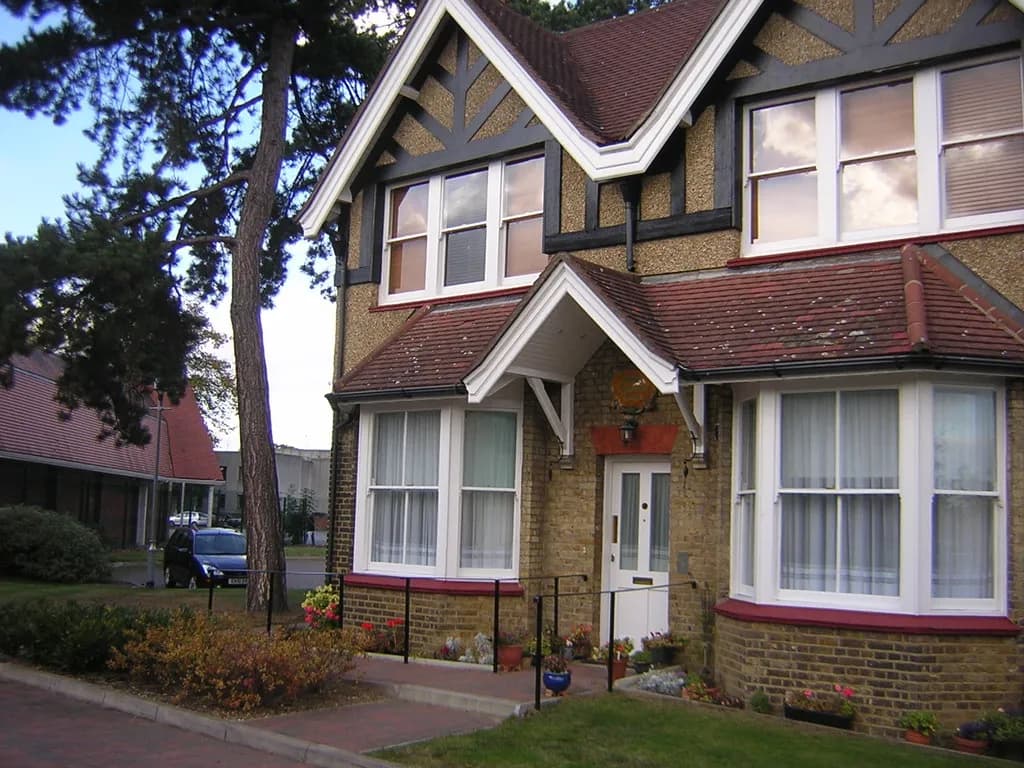
Today, 22 of the original cottages survive, protected as Grade II listed buildings by Historic England. These cottages are recognised as early and rare examples of homes purpose-built for destitute children, reflecting both architectural innovation and changing social attitudes towards child welfare. Redbridge Council has also designated the site a Conservation Area, highlighting its pioneering role as a social care experiment.
However, the history is complex. Barnardo’s was involved in the British child migration movement, where thousands of children were sent mainly to Canada and Australia. Once seen as offering better opportunities, this policy is now understood as harmful, with many children suffering neglect and abuse. Barnardo’s charity and the UK government have since acknowledged this as a deeply misguided policy, and a formal apology was issued in 2010 for the suffering endured by child migrants.
Despite this difficult chapter, Barkingside remains a significant place in Redbridge and Britain’s social history. The surviving cottages and the village layout provide a glimpse into how Victorian society began rethinking approaches to poverty, childhood and care. The Barnardo’s Village Home at Barkingside stands as a local landmark, marking the evolution of childcare that still resonates today.
For residents of Redbridge, the site is more than just history. It represents a community’s role in shaping compassionate social care, reminding us of the importance of protecting children and offering hope and opportunity even in troubled times.
Image credit: Christopher Hilton, Cottage for tuberculosis sufferers, former Barnardo’s home, Barkingside, via Geograph / Wikimedia Commons, CC BY-SA 2.0.