The Palladian Masterpiece That Stood at Redbridge's Heart
In 1715, Sir Richard Child commissioned one of the finest country houses in England. By 1825, it was rubble. The story of Wanstead House, which once dominated the landscape of what is now the London Borough of Redbridge, is a tale of architectural ambition, vast inherited wealth, and spectacular ruin.
The Vision of Colen Campbell
Wanstead House rose on the foundations of an earlier Tudor mansion. Sir Richard Child, later created 1st Earl Tylney, engaged the Scottish architect Colen Campbell to design a residence in the Neo-Palladian style that was transforming English architecture. Completed in 1722 after seven years of construction, the house measured 260 feet by 70 feet and cost an estimated £360,000; a staggering sum for the era.
Campbell's design featured what he claimed was "Great Britain's first classical portico," a six-columned Corinthian entrance that set the standard for Palladian country houses. The architect published his designs in Vitruvius Britannicus in 1715, establishing Wanstead as a model for the new architectural fashion.
The Tylney-Long Fortune
The house passed through the Child and Tylney families until 1784, when Sir James Tylney-Long inherited the estate from his uncle, the 2nd Earl Tylney. When Sir James died in 1794, the estate passed to his son, James, who himself died in 1805 just weeks before his eleventh birthday.
The inheritance fell to his eldest sister, Catherine Tylney-Long, born on 2 October 1789. At sixteen, she became what society called "the richest heiress in England" and "the richest commoner in England." Her fortune comprised financial investments worth £300,000 (equivalent to approximately £22.4 million today) plus estates generating £40,000 in annual rents. Society knew her as "The Wiltshire Heiress."
Among her suitors was the Duke of Clarence, later King William IV. In 1812, Catherine married William Wellesley-Pole, nephew of the Duke of Wellington. The groom changed his name by Royal Licence to Pole-Tylney-Long-Wellesley, securing his connection to the vast Tylney-Long fortune.
Ablaze with Gold
Contemporary accounts suggest the couple's refurbishment was extravagant. A newspaper reported in 1814 that "Long-Wellesley is fitting up Wanstead House in a style of magnificence exceeding even Carlton House… The whole of the interior will present one uniform blaze of burnished gold." The landscape gardener Humphry Repton was engaged in 1813 to remodel the park, and some of his informal plantings survive in Wanstead Park today.
The glittering refurbishment masked mounting debts. William Pole-Tylney-Long-Wellesley's extravagance knew no bounds. In 1822, he secured appointment as Gentleman Usher to George IV, a post that granted him immunity from arrest for debt. The protection was temporary. Around 1823, he fled to the Continent to escape his creditors, beginning an affair with Helena Paterson Bligh.
The Forced Sale
In June 1822, the trustees auctioned the house's contents over 32 days to satisfy encumbrances. The estate had been mortgaged to secure debts of £250,000. When no tenant could be found for the mansion, the trustees made a fateful decision.
Sir James Tylney-Long's will had stipulated that Wanstead House was "inalienable from the Park for 1,000 years." This legal constraint prevented sale of the house as a standing structure. In 1825, the trustees demolished it. The sale of building materials raised a mere £10,000; a humiliating return on a house that had cost £360,000 to build.
A Tragic End
Catherine Tylney-Long died on 12 September 1825 at Richmond, Surrey. She was 35 years old, passing away shortly after the destruction of the house that had embodied her family's fortune and status. Her husband survived in poverty. In 1827, Captain Thomas Bligh successfully sued William for "criminal conversation" with his wife, winning £6,000 in damages. William married Helena Paterson Bligh in 1828 and died in cheap lodgings in 1857.
What Remains in Redbridge
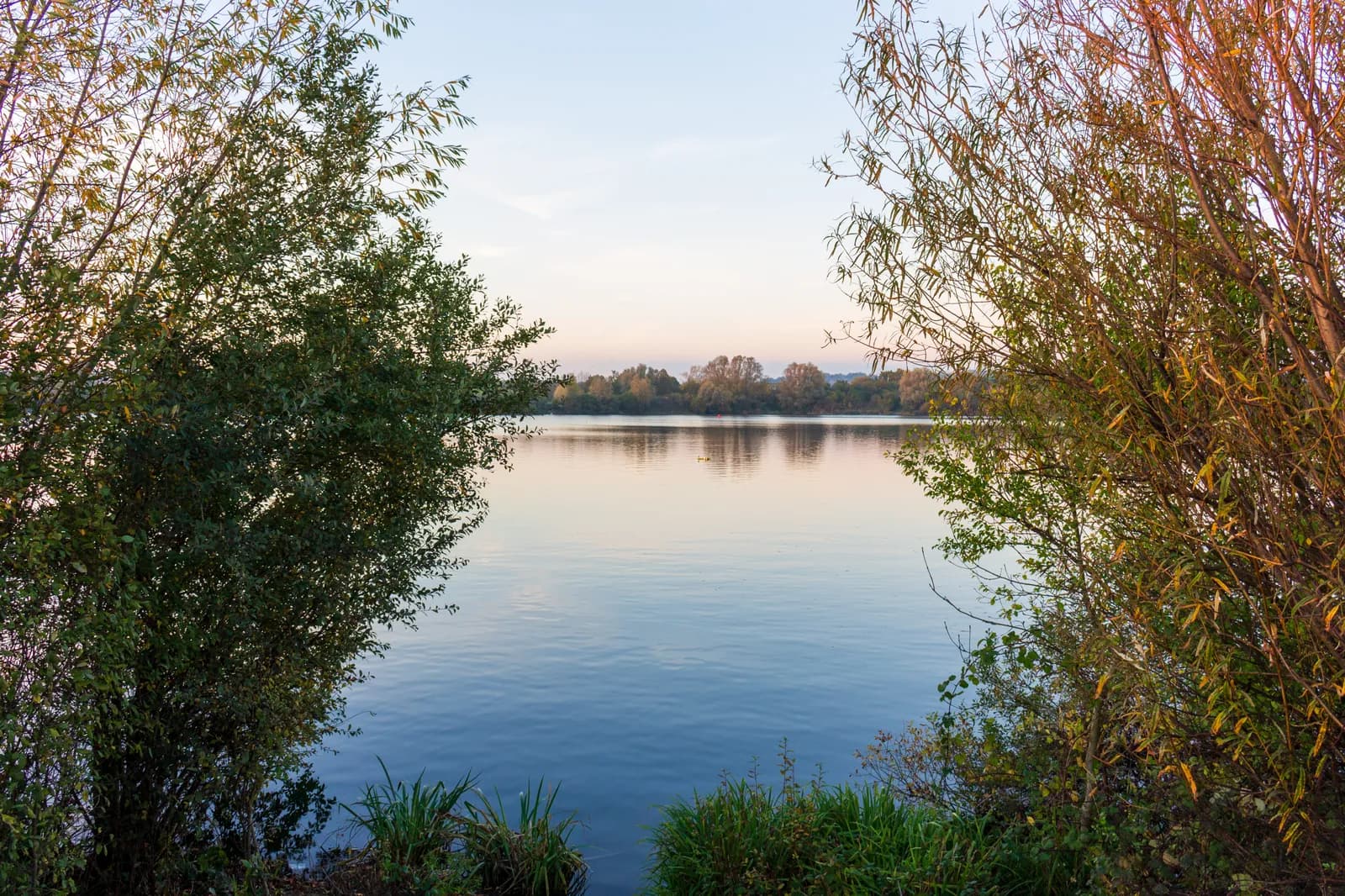
Today, the grounds of Wanstead House form Wanstead Park, a 140-acre municipal park in the London Borough of Redbridge. The City of London Corporation acquired 184 acres of the former estate in 1880, and the park officially opened to the public in 1882. It is now Grade II* listed on the Register of Historic Parks and Gardens.
Several structures survive as tangible links to the estate's grandeur. The Temple and the Grotto, both built around 1760, are listed buildings. Two entrance gate piers embellished with Sir Richard Child's monogram still stand at the junction of Overton Drive and Blake Hall Road. The Ornamental Canal and the Fortifications, eight small islands arranged in a circular pattern, remain visible features. Traces of Evelyn's Avenue, a sweet-chestnut allusion to the estate's earlier history, can still be traced south-west from the Basin.
The park is accessible from Wanstead Underground station on the Central line and Redbridge station, serving the local community that now enjoys what was once a private pleasure ground. In 1992, a Management Plan was initiated to re-establish something of the formality of the "Great House" grounds within its Redbridge context.